
Regenerative Medicine: Challenging the Body to Repair Itself
Keynote Speaker: Prof. Pamela Habibović
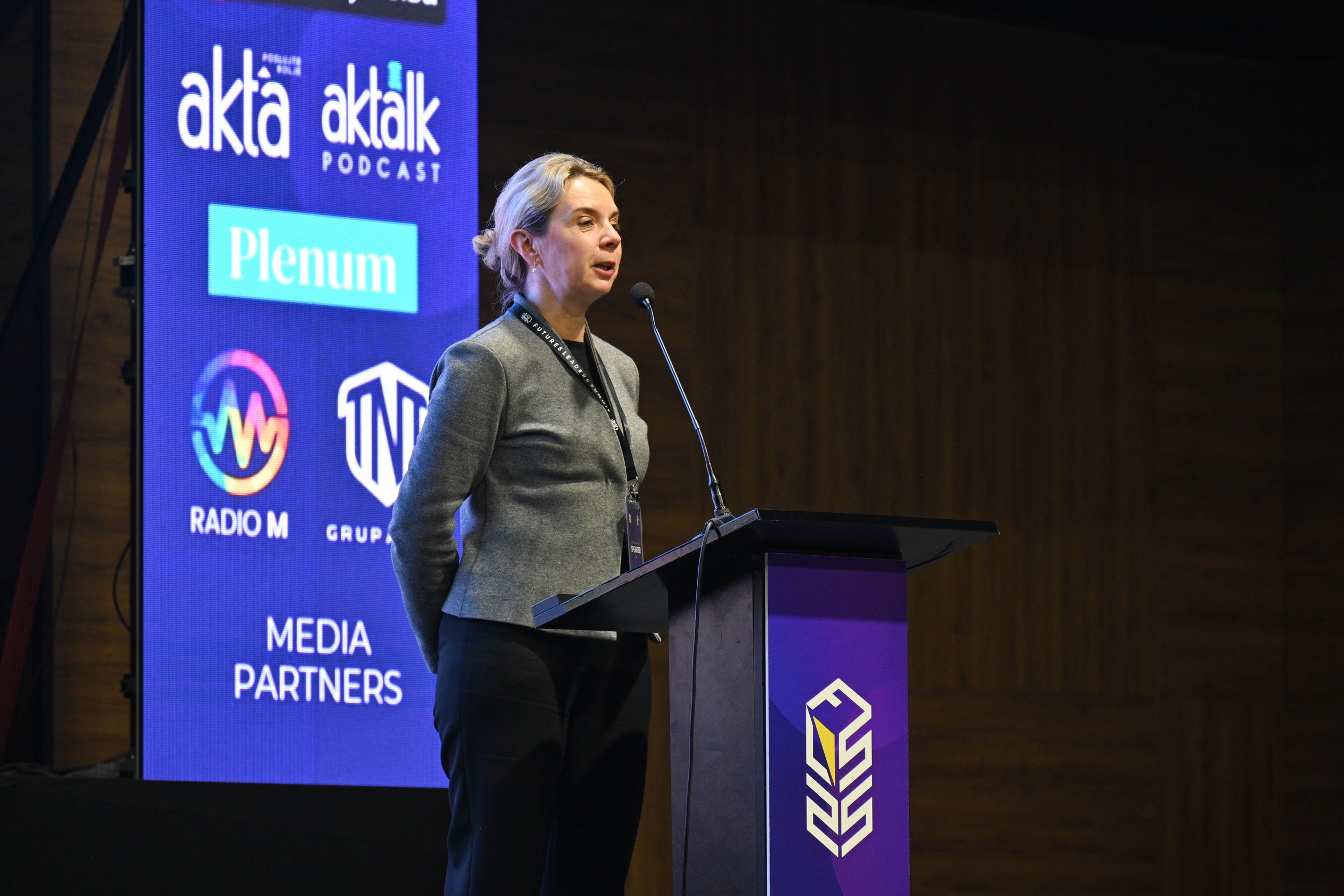
At the Futures Leaders Summit, Professor Pamela Habibović presents a keynote that explores one of the most promising frontiers of modern medicine — regenerative medicine.
In her lecture, “Regenerative Medicine: Challenging the Body to Repair Itself,” Prof. Habibović introduces the core concept of regenerative medicine: stimulating the body’s own capacity to repair, regenerate, and restore normal function. Rather than replacing damaged tissues, regenerative strategies aim to activate intrinsic biological processes, offering transformative potential for a wide range of medical conditions.
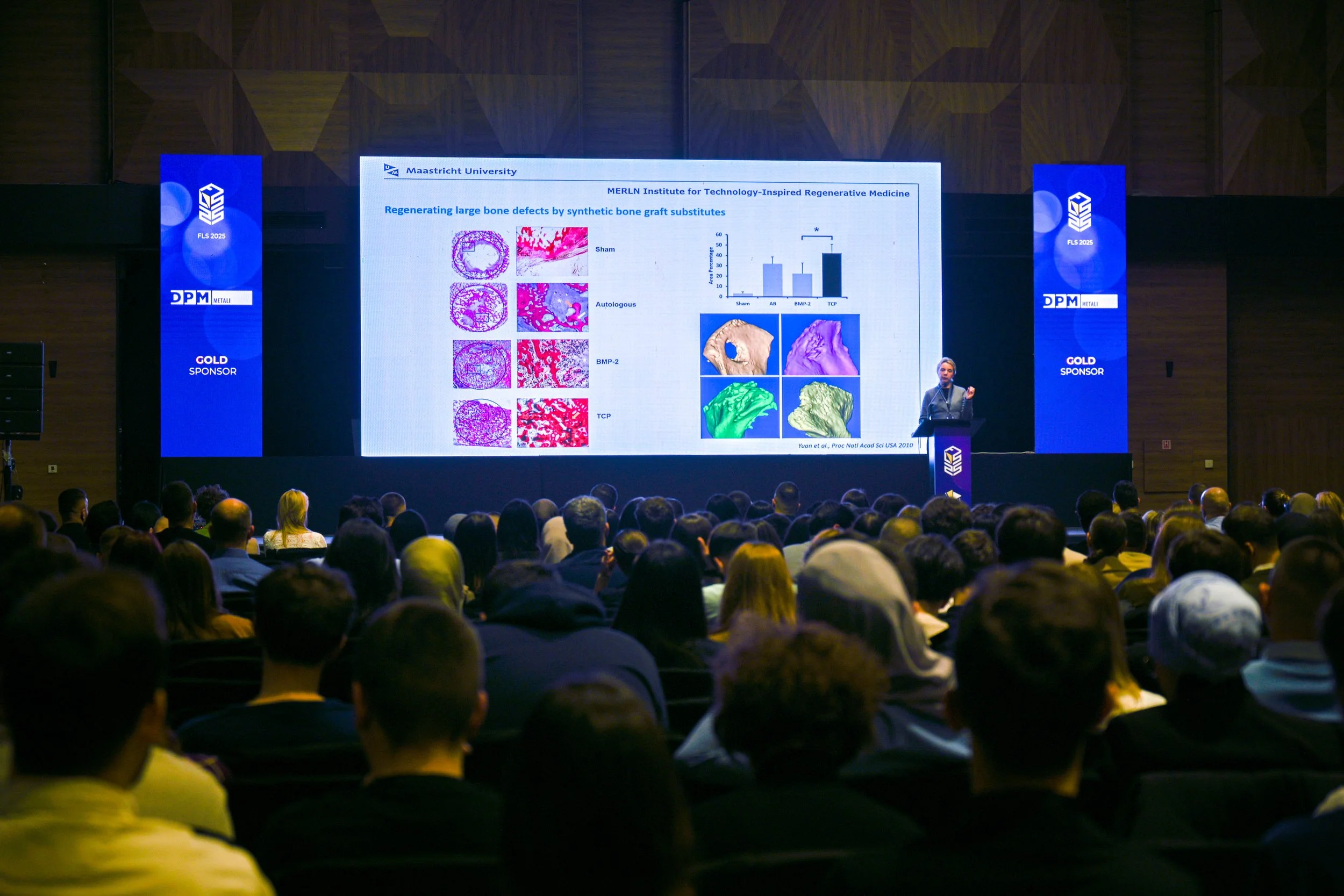
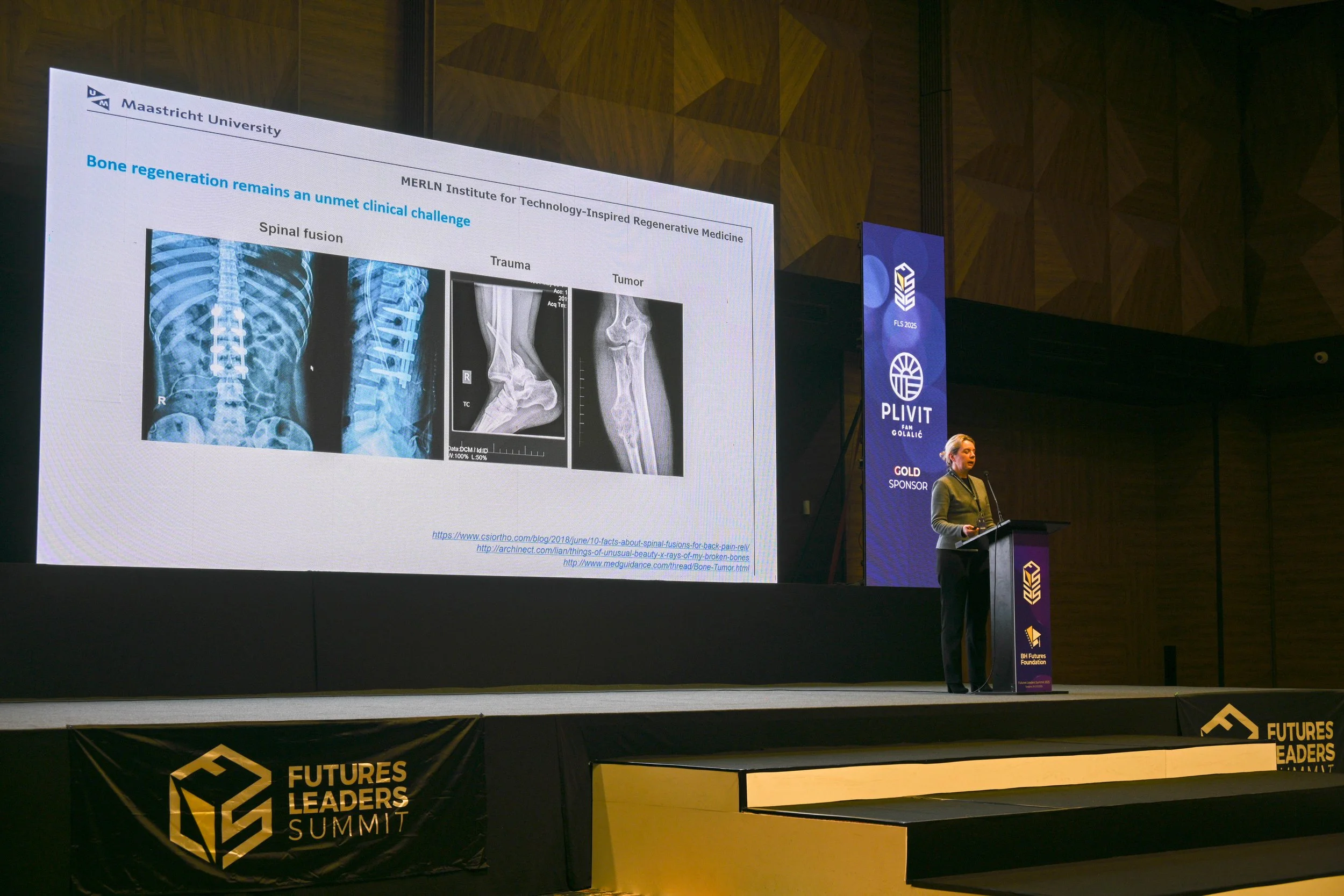
A central focus of this keynote is the growing role of synthetic biomaterials as a foundation for regenerative therapies. Compared to approaches based on cells, tissues, or growth factors, biomaterials-based strategies present a more scalable, controllable, and cost-effective alternative. However, designing materials that can precisely control physiological processes in space and time remains a significant scientific challenge.
Prof. Habibović discusses how overcoming these challenges requires a new generation of tools for the design, fabrication, and characterization of biomaterials, as well as advanced methods for studying their dynamic interactions with biological systems. The lecture highlights recent advances in biomaterials-based regenerative therapies, alongside emerging research directions that are shaping the future of the field.
Beyond the science, this keynote is enriched with personal reflections on building a career in regenerative medicine. Prof. Habibović shares insights from her own scientific journey, offering perspective on interdisciplinary research, innovation, and long-term career development in a rapidly evolving field.
This session is particularly valuable for students and professionals interested in biomedical engineering, materials science, regenerative medicine, and translational research, as well as those seeking to understand how cutting-edge science can move from the laboratory to real-world medical applications.