
Questioning the Question and the Answer: AI, Authority and the Conditions for Ethical Action

Nataša Kusmuk-Duus
“Leading with AI: Ethics, Human Judgement and Governance” · WF4D Gender Leadership Lab · Sarajevo, 17 and 24 October 2026
I asked the Bosnia and Herzegovina Futures Foundation scholars whether they should trust me, and later deliberately gave them a reason to question what I was telling them. Some were willing to trust me until I did something to lose that trust, while others expected my actions to establish whether their confidence was warranted. When I altered a statistic and its meaning, some raised their hands within seconds to challenge me, and we had a practical basis for discussing authority, power and control.
That exchange took place within the WF4D Gender Leadership Lab, part of the Women’s Forum for Development (WF4D), a platform supported by UNDP and the Agency for Gender Equality of Bosnia and Herzegovina for policy dialogue, advocacy and knowledge exchange on women’s leadership. [1] At the centre of the Lab is a mentoring programme, developed in partnership with the Bosnia and Herzegovina Futures Foundation, in which 35 mentor–mentee pairs began meeting in early October 2026. Early feedback from mentees suggests a promising start. Hana Ćatić felt that her mentor, Goran, “understood my needs and goals and has the right personality that will have a positive effect on me.” Asja Omerović described feeling comfortable from their first meeting, adding that by its end she was “even more confident that I had made the right choice in choosing her as my mentor.” Adna Čičko highlighted good communication and said that together they had “realized what my aims are for this cycle, and how we are going to work on them.” Seminars such as ours complement that mentoring work. They offer a space where experience can be exchanged across generations, and where questions that are still new to public discussion in Bosnia and Herzegovina, among them how gender shapes the development and use of artificial intelligence, can be opened and examined together.
Our two seminars, “Ethics in everyday choices” on 17 October 2026 and “Governance in practice” on 24 October 2026, formed the “Leading with AI: Ethics, Human Judgement and Governance” series. The first asked when AI augments good leadership and when it begins to replace judgement a leader should personally own. The second asked how we build organisations in which responsible AI use does not depend on every individual making a perfect decision. Among those who completed the intake questionnaire, 91% reported using AI daily, while some explained that they used ChatGPT or Gemini hourly when working on a project. We examined how AI enters decisions about learning, work and other people, including circumstances where accepting an answer without questioning it could carry serious consequences.
The seminars created a safe space in which the scholars could take the time to examine their values, fears and possible actions, including how they decided whom or what to trust. We considered a hypothetical comparison between refusing a ride with a friend speeding in a BMW and being willing to enter a driverless vehicle without knowing what testing or evidence supported its safety. The comparison directed attention to whether familiarity with a person, confidence in technology or assumptions about regulation affected what we were willing to accept. We questioned whether we applied the same scrutiny when the source of risk appeared human or technological.
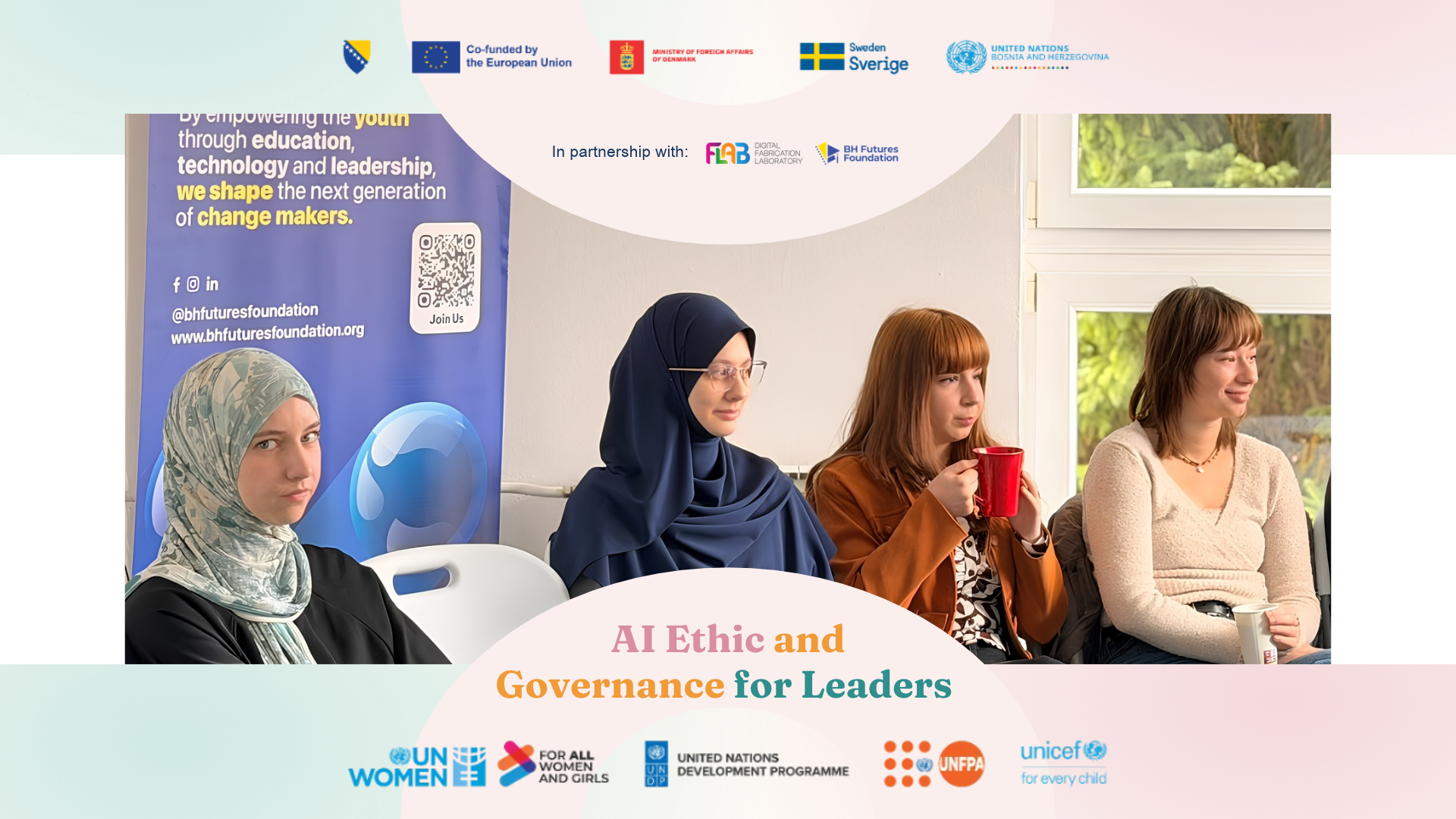
“Ethics in everyday choices”, 17 October 2026
AI can do it. Do we understand what it has done?
In our second seminar, we considered Asimov’s fictional Three Laws of Robotics, examining how preventing harm, obedience and self-preservation reflect human expectations about technologies we develop and seek to control.[2] AI can help us explore unfamiliar subjects, translate material and develop ideas, but we still need to judge whether an answer is sound and whether we understand enough to use it. Our discussion concerned what AI assistance could achieve, when its limitations required another approach and the responsibility we retained for those decisions.
To assess an app built with AI assistance, we need to understand what it should do, how to test its functions and what could go wrong when somebody uses it. An app that opens and responds to a few commands can still produce incorrect results, mishandle personal information or fail under conditions we have not tested. If we rely on AI to write the code, design the tests and judge whether it has succeeded, without independent checks, we risk accepting its definition of success rather than establishing whether the app meets our needs. We need enough understanding to recognise the limits of our checks and know when qualified review is necessary.
We asked our preferred AI platforms what they knew about us, then examined whether their responses reflected information we had shared or assumptions that sounded convincing. We questioned how our inputs shaped an answer and what we should consider before sharing information about ourselves or others. Being able to upload information does not establish our right to share it, particularly when the convenience benefits us while the privacy risks fall on somebody else. Our responsibility extends to what we put into these systems, not only what we do with their answers, including whether sharing information is ethical, lawful and consistent with our obligations to protect privacy and confidentiality.
Whose knowledge gets to count?
Women can use AI without having an equal say in how these systems are developed, whose knowledge they draw on or how their experiences are represented. An AI-generated ethics reading list might foreground Kant and Mill while overlooking non-Western intellectual traditions or relevant Bosnian scholarship. UNESCO’s 2024 research identified gender stereotypes in tested GPT-2, GPT-3.5 and Llama 2 outputs, including associations between women and domestic roles and men and higher-status work.[3] These findings give substance to concerns about whose contributions are recognised as authoritative and whose are treated as supportive. Leadership programmes need to support women’s technical learning and experimentation while addressing the resources and authority needed to put that expertise into practice. Inclusion alone does not establish whether women have the capability to contribute, the capacity to act or the authority to influence decisions about how technology is developed and used.
Women’s exclusion from medical research has shaped the evidence available to clinicians. United States Food and Drug Administration guidance in 1977 recommended excluding women of childbearing potential from Phase I and early Phase II drug trials. The 1993 NIH inclusion law required women’s participation in NIH-funded clinical research, but knowledge and funding gaps persisted, as the National Academies documented in 2024.[4] AI therefore enters a research system shaped by decisions about whose bodies were studied, which conditions received funding and whose experiences counted as evidence; it can reproduce those omissions rather than correct them simply by processing information faster. The Swedish MASAI breast-cancer screening trial nevertheless demonstrates the potential of a defined application. AI supported radiologists interpreting mammograms and allocating screening work, improving cancer detection and reducing screen-reading workload.[5] These gains do not remove the need to examine whose data underpin a system, where its performance has been tested and whether its benefits reach people whose needs have historically received less attention.
Financial records also reflect the opportunities people have had. Historically, laws and lending practices restricted women’s ability to manage money, obtain credit and build independent financial records. France’s 1965 reform gave married women the right to open a bank account without their husband’s permission, while the United States prohibited credit discrimination based on sex or marital status through the Equal Credit Opportunity Act in 1974.[6] Australia’s Commonwealth public service marriage bar, abolished in 1966, generally required women to leave their permanent positions on marriage, interrupting the employment through which they could earn income and build financial independence.[7] World Bank guidance identifies collateral and credit-history barriers affecting women’s access to finance.[8] If an AI system treats the consequences of restricted opportunities as evidence of individual risk, it can turn earlier institutional exclusion into a new reason to deny access. The critical issue is how the assessment accounts for the conditions that produced those records, rather than allowing an apparently neutral calculation to conceal the disadvantage it carries forward.
Unpaid care also shapes the time and resources available for learning, paid work and leadership. The International Labour Organization estimated that care responsibilities kept 708 million women and 40 million men outside the labour force in 2023.[9] AI tools can assist with correspondence, planning and household coordination, but completing tasks faster does not necessarily change who remains responsible for them. In our seminars, we discussed how expectations of AI assistance can shorten deadlines and increase output demands. When institutions use machine-assisted speed and presentation as the standard, a tool offered as assistance can become an implicit requirement, while the person using it retains responsibility for the work. The time needed to understand a task, examine evidence and correct mistakes remains part of producing a reliable result. Whether assistance reduces women’s overall workload or enables them to accommodate further demands depends on how households share responsibilities and how employers respond to the time saved.
What happens when doing the right thing means saying no?
In our seminars, we reflected on how money, personal connections and authority can influence whose interests are protected. We questioned whether wealth, popularity or influence were sufficient grounds for calling someone a good leader, including those shaping AI and technology. The question was how they used that power, whose interests their decisions served and whether those affected could challenge them. A fictional heart-transplant exercise brought those concerns into a decision involving two patients assumed to be clinically eligible and compatible, for whom we asked AI to recommend an allocation. We questioned its reasoning, the information it lacked and who should decide, before introducing a hospital funder seeking priority for a relative without any change in the clinical circumstances. The discussion moved beyond whether that request was wrong to whether the doctor could refuse it, whose authority would support that refusal and how the patients would be protected. Ethical agreement alone could not provide those protections; they depended on clear responsibilities, enforceable procedures and routes for challenging interference in the decision.
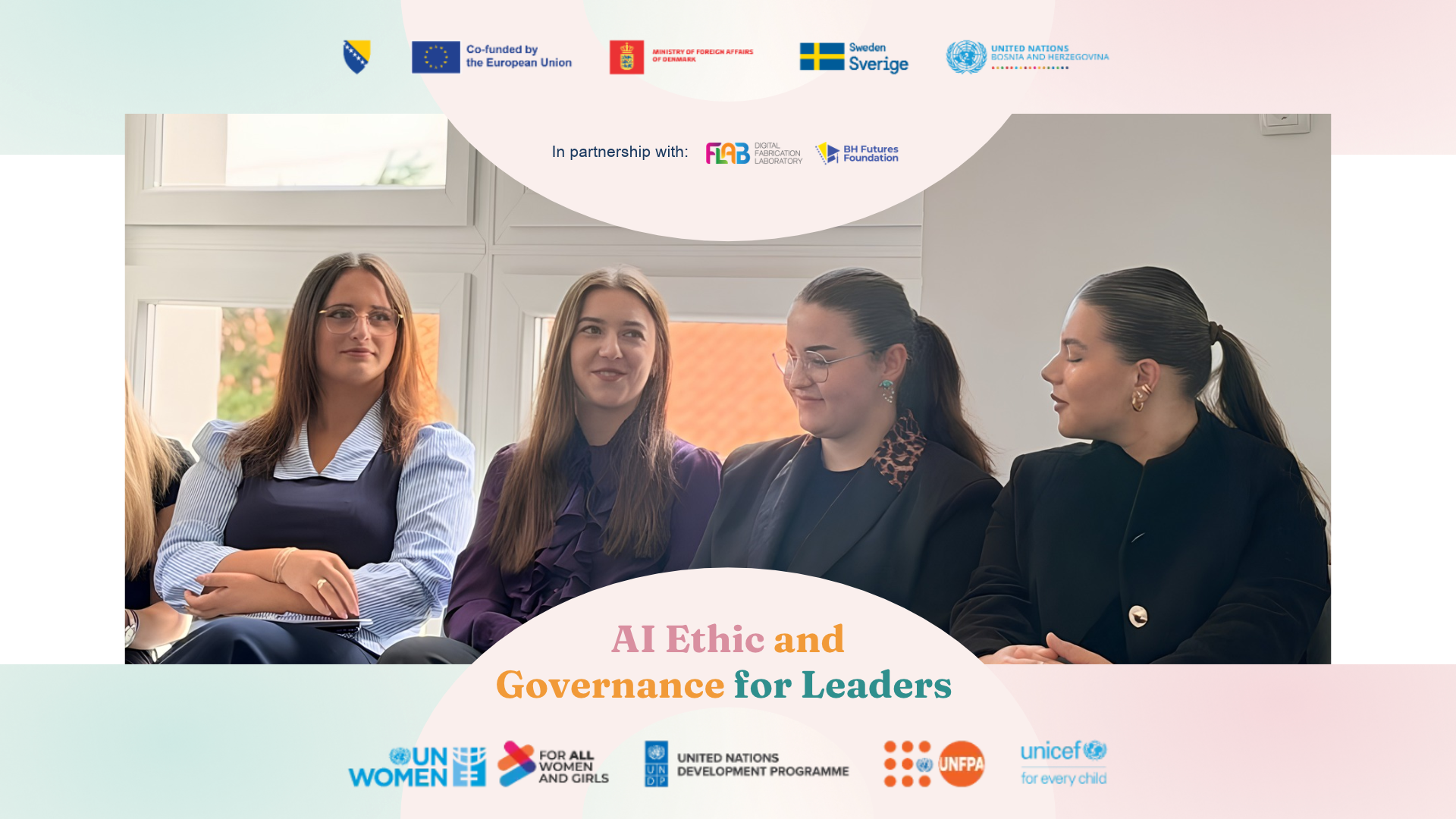
“Governance in practice”, 24 October 2026
In another activity, the scholars had 20 minutes to review a report and respond to an email from Alex, a fictional manager requesting approval for publication. They did not rush to approve it, but responded professionally, explaining which changes or checks were needed before they could support publication and acknowledging what they had not had time to verify. I was impressed by how many approached the task as reviewers, checking selected references and statistics and trying to establish what the findings meant, while examining both the altered report and the published original. Their responses exposed a limitation that more time alone would not necessarily resolve; assessing the claims also required understanding what the surveys measured, how the data had been interpreted and which qualifications applied. They could withhold approval pending verification without claiming that an unverified finding was false, an important exercise of judgement when neither the available time nor their understanding justified a confident conclusion.
We also acknowledged how self-preservation and concern for job security could come into conflict with the responsibility to withhold approval. Recognising that further checks are needed does not remove the fear of disappointing a manager or being treated as difficult for questioning an instruction. Here, the tensions between preventing harm, obedience and self-preservation were human ones. The ethical responsibility remains, but governance must give people a practicable way to question, defer or refuse approval, and protect them from retaliation for raising a legitimate concern. I returned to these tensions in subsequent reading. Murray and Andhov’s examination of OpenAI directs scrutiny towards how the organisations developing AI protect their public-purpose commitments when commercial investment enables their work while introducing competing expectations.[10]
Governance can feel like chasing a wild horse when technological capabilities and everyday uses change faster than institutions can establish responsibilities, safeguards and effective routes for challenge or remedy. We compared national approaches, distinguishing existing legal duties from guidance, voluntary standards and proposals awaiting implementation. Some mechanisms seek to identify risks before deployment, while others provide penalties or remedies once harm has occurred. These differences affect whether a safeguard is operating, who can enforce it and what response is available to an affected person, rather than simply whether a government has announced an intention to act.
In our seminars, we considered how AI’s environmental demands sit with our values when the resources used are largely invisible at the point of use. The International Energy Agency projects substantial growth in data centre electricity demand despite improvements in efficiency.[11] We rarely approach a conversation with AI knowing how much electricity it will require or which communities could bear the associated pressures for our one chat prompt. That uncertainty brought the discussion back to our moral compass and whether purposes ranging from medical research to generating kitten pictures justified the resources involved. Ethical awareness meant considering what we chose to generate and for whose benefit, while recognising that our convenience could carry costs elsewhere.
Across the seminars, the scholars questioned information presented with authority, examined what they could verify and considered the practical pressures that could affect their ability to act on an ethical judgement. Waiting for someone to label content as AI-generated, authentic, factual or dangerous leaves responsibility for scrutiny elsewhere, when the decision to trust, use or share it still requires our judgement. An accurate account can violate privacy, a human author can mislead and generated content can be correct; we still have to examine the evidence, what is missing and who could be harmed. Students can develop the judgement to question information and resist harmful instructions, but institutions must make that responsibility practicable through clear authority, protected routes for challenge and support for those who would otherwise bear the consequences of acting on their ethical convictions.
This activity is implemented within the Gender Equality Accelerator (GEA) Joint Programme, implemented by United Nations agencies in Bosnia and Herzegovina – UN Women, UNDP, UNFPA and UNICEF – with financial support from the European Union, Denmark and Sweden, and in cooperation with the Agency for Gender Equality of Bosnia and Herzegovina, the Gender Centre of the Federation of Bosnia and Herzegovina and the Gender Centre – Centre for Gender Equality and Equity of Republika Srpska.
References
Asimov, Isaac. (1942). Runaround. Astounding Science-Fiction, March, 94–103. Text reproduced by Williams College.
Australian Public Service Commission. (2016). Fifty years of APS employment data. State of the Service Report 2015–16.
French Government. (2023, 12 July; updated 13 July). « La femme mariée avait le statut de mineure au même titre que les enfants ». Interview with Sabine Effosse.
Hernström, Veronica, et al. (2025). Screening performance and characteristics of breast cancer detected in the Mammography Screening with Artificial Intelligence trial (MASAI): a randomised, controlled, parallel-group, non-inferiority, single-blinded, screening accuracy study. The Lancet Digital Health, 7(3), e175–e183. https://doi.org/10.1016/S2589-7500(24)00267-X
International Energy Agency. (2026). Key Questions on Energy and AI. Executive summary. Paris: IEA.
International Labour Organization. (2024, 29 October). Unpaid care work prevents 708 million women from participating in the labour market.
Kreiswirth, Brian, and Anna-Marie Tabor. (2016, 31 October). What you need to know about the Equal Credit Opportunity Act and how it can help you: Why it was passed and what it is. Consumer Financial Protection Bureau.
Lowry, Megan. (2024, 5 December). To Advance Women’s Health Research, NIH Should Form New Institute and Congress Should Appropriate New Funding, Says Report. National Academies of Sciences, Engineering, and Medicine.
Murray, Ian, and Alexandra Andhov. Governance for the public good or private gain? Presentation slides. Centre for Social Impact, University of Western Australia, 13 October 2026.
National Archives of Australia. (n.d.). Appointment of women to the Commonwealth Public Service – Note for Cabinet discussion. Learning resource reproducing a Cabinet document dated 2 April 1962.
National Institutes of Health, Office of Research on Women’s Health. (2024, 24 April). History of Women’s Participation in Clinical Research.
UNESCO. (2024, 7 March; updated 5 July). Generative AI: UNESCO study reveals alarming evidence of regressive gender stereotypes.
United Nations Development Programme. (2026, 14 October). WF4D Gender Leadership Lab activities begin in Sarajevo.
World Bank. (n.d.). Access to Finance. Using Digital Solutions to Address Barriers to Female Entrepreneurship.
Sources accessed 27 October 2026.
[1]UNDP (2026), for programme context. Seminar observations and intake findings are the author’s account.
[2]Asimov (1942).
[3]UNESCO (2024).
[4]NIH Office of Research on Women’s Health (2024); Lowry (2024).
[5]Hernström et al. (2025), MASAI screening trial.
[6]French Government (2023); Kreiswirth and Tabor (2016).
[7]Australian Public Service Commission (2016); National Archives of Australia (n.d.), reproducing a Cabinet note dated 2 April 1962.
[8]World Bank (n.d.). The conditional argument about AI assessment is the author’s interpretation.
[9]International Labour Organization (2024); estimates concern 2023.
[10]Ian Murray and Alexandra Andhov, Governance for the public good or private gain? (CSI UWA presentation slides, 13 October 2026), pp. 7–9, https://assets.csi.edu.au/assets/Ian-Murray-Alexandra-Andhov-OpenAI-Presentation.pdf.
[11]International Energy Agency (2026), executive summary.